Cart
0

Realistic 3D Spine Models for Surgical Training, Teaching & Demonstrations
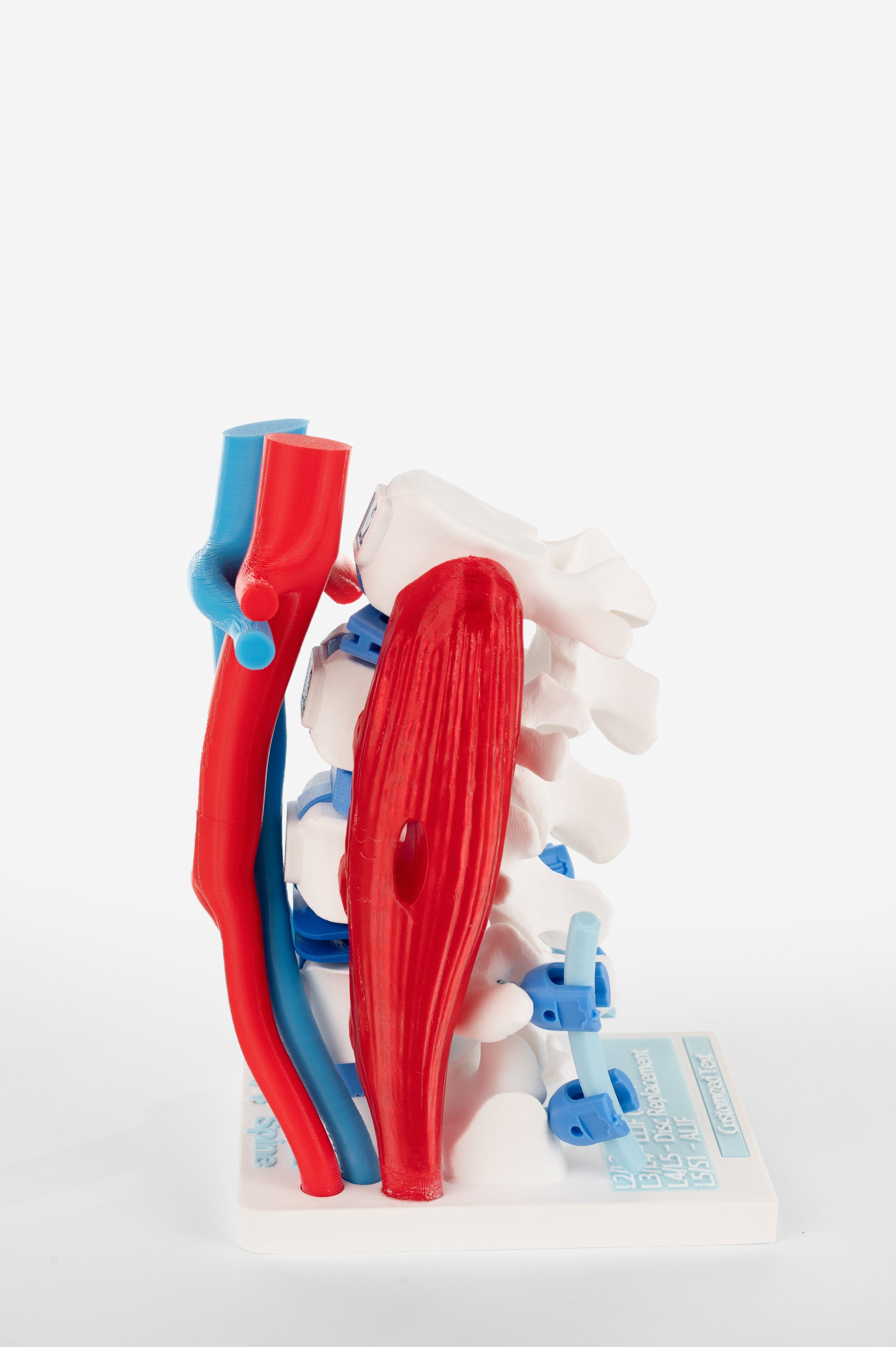
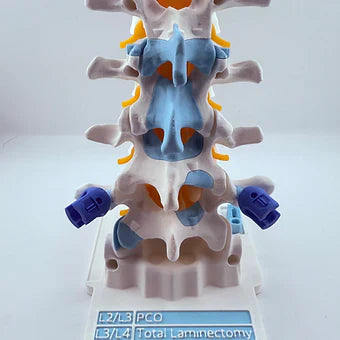
Medical education has entered a new era where hands-on learning is essential for developing clinical skills and improving patient outcomes. Realistic 3D spine models have become indispensable tools for surgical training, anatomy education, medical demonstrations, and patient consultations. Designed to accurately replicate the human spine, these advanced anatomical models help bridge the gap between textbook knowledge and real-world clinical experience.
Whether you're a surgeon, medical educator, healthcare institution, or medical device company, investing in high-quality spine models can transform the way you teach, train, and communicate complex spinal anatomy.
Why Realistic 3D Spine Models Are Essential in Modern Healthcare
Traditional anatomy education often relies on textbooks, diagrams, and digital images. While these resources remain valuable, they cannot fully replicate the experience of examining a three-dimensional anatomical structure.
Realistic 3D spine models provide learners with a tactile, interactive way to study spinal anatomy, making complex concepts easier to understand and remember.
The Shift Toward Hands-On Medical Learning
Healthcare education increasingly emphasizes active learning because it helps students and professionals retain information more effectively.
By physically interacting with a spine model, learners can better understand:
-
Vertebral alignment
-
Intervertebral discs
-
Spinal curvature
-
Nerve pathways
-
Facet joints
-
Pelvic anatomy
This practical approach improves confidence before entering clinical practice.
The Benefits of Realistic 3D Spine Models for Surgical Training
Advanced spine models are designed to simulate real anatomical structures, making them invaluable for surgeons and residents.
Improve Surgical Planning
Before performing complex spinal procedures, surgeons often review anatomy in detail.
Realistic spine models allow physicians to:
-
Visualize surgical pathways
-
Explain procedures to colleagues
-
Demonstrate implant positioning
-
Review complex spinal anatomy
-
Prepare for challenging cases
Having a physical model enhances understanding in ways digital images alone cannot.
Practice Without Patient Risk
Simulation-based learning allows healthcare professionals to refine techniques in a controlled environment before applying them in clinical settings.
This approach supports safer learning and greater procedural confidence.
Transforming Medical Education with Interactive Spine Models
Medical students benefit tremendously from hands-on educational tools.
Interactive spine models provide a visual and tactile learning experience that reinforces classroom instruction.
Better Anatomy Retention
Learning spinal anatomy from a physical model improves spatial awareness and long-term memory.
Students gain a clearer understanding of:
-
Cervical spine
-
Thoracic spine
-
Lumbar spine
-
Sacrum
-
Pelvis
-
Vertebral relationships
This foundation supports success throughout medical training.
Supporting Healthcare Educators
Professors and instructors use realistic spine models to:
-
Demonstrate anatomical structures
-
Explain spinal biomechanics
-
Teach pathological conditions
-
Conduct laboratory sessions
-
Improve student engagement
These tools encourage interactive discussions and collaborative learning.
Enhancing Medical Demonstrations and Conferences
Professional anatomical models play a vital role beyond the classroom.
Healthcare organizations use realistic spine models during:
-
Medical conferences
-
Surgical workshops
-
Product demonstrations
-
Continuing medical education (CME)
-
Clinical seminars
Interactive demonstrations help audiences understand complex surgical procedures more quickly than presentations alone.
Supporting Medical Device Companies
Medical device manufacturers frequently use anatomical spine models to demonstrate:
-
Pedicle screws
-
Rod systems
-
Interbody cages
-
Artificial discs
-
Spinal implants
Realistic models allow clinicians to visualize how devices interact with human anatomy.
Improving Patient Education Through Visual Learning
Patients often find spinal conditions difficult to understand from MRI images or medical terminology alone.
A realistic spine model simplifies communication by providing a clear visual representation of the affected anatomy.
Explaining Common Spine Conditions
Healthcare providers can use spine models to demonstrate:
-
Herniated discs
-
Degenerative disc disease
-
Spinal stenosis
-
Scoliosis
-
Vertebral fractures
-
Cervical radiculopathy
-
Lumbar instability
Patients who understand their condition are more likely to participate confidently in treatment decisions.
Building Stronger Physician-Patient Relationships
Visual education helps:
-
Reduce patient anxiety
-
Improve informed consent
-
Encourage meaningful questions
-
Increase treatment compliance
-
Strengthen trust
Clear communication is a key component of quality healthcare.
Features That Define a Premium 3D Spine Model
Not every anatomical model delivers the same educational value.
Choosing a premium model ensures better learning outcomes and long-term durability.
Anatomical Precision
Look for models that accurately reproduce:
-
Cervical vertebrae
-
Thoracic vertebrae
-
Lumbar vertebrae
-
Sacrum
-
Pelvic anatomy
-
Intervertebral discs
-
Spinal curvature
Clinical accuracy is essential for effective teaching.
Interactive Components
The best spine models include:
-
Detachable vertebrae
-
Removable discs
-
Flexible spinal movement
-
Surgical resections
-
Pathological features
Interactive components create engaging educational experiences.
Durable Construction
Professional anatomical models should withstand frequent use in:
-
Medical schools
-
Hospitals
-
Clinics
-
Conferences
-
Simulation laboratories
High-quality materials provide long-lasting performance and excellent return on investment.
Choosing the Right Spine Model for Your Organization
Every healthcare institution has unique educational goals.
Before purchasing, consider the following questions:
Who Will Use the Model?
Different users require different features.
Examples include:
-
Medical students
-
Residents
-
Surgeons
-
Physical therapists
-
Chiropractors
-
Medical device representatives
What Is the Primary Purpose?
Determine whether the model will be used for:
-
Anatomy education
-
Surgical planning
-
Patient consultations
-
Clinical demonstrations
-
Product training
Selecting the appropriate model ensures maximum educational value.
Best Practices for Using 3D Spine Models
To maximize learning outcomes:
-
Integrate models into anatomy lectures.
-
Pair physical models with MRI or CT images.
-
Encourage hands-on student participation.
-
Demonstrate surgical procedures step-by-step.
-
Use models during patient consultations.
-
Incorporate them into continuing education programs.
Combining visual, tactile, and clinical instruction creates a more effective learning experience.
Frequently Asked Questions
Why are realistic 3D spine models important?
They provide hands-on learning that improves anatomical understanding, surgical preparation, and patient education.
Who should use spine anatomy models?
Medical schools, hospitals, surgeons, residents, healthcare educators, physical therapists, chiropractors, and medical device companies all benefit from realistic anatomical models.
Are spine models effective for patient education?
Yes. Visual demonstrations simplify complex spinal conditions and help patients better understand treatment options.
How do surgeon-designed models differ from standard anatomy models?
Surgeon-designed models focus on clinical accuracy and real-world applications, making them more effective for education and professional training.
Future Trends in Spine Education
Medical education continues to evolve with innovations such as simulation technology, virtual reality, and artificial intelligence.
Despite these advancements, realistic physical spine models remain an essential learning resource because they provide tactile interaction that digital tools cannot fully replace.
The future of healthcare education lies in combining advanced anatomical models with emerging technologies to create immersive learning environments.
Conclusion
Realistic 3D spine models for surgical training, teaching, and demonstrations have become indispensable tools for modern healthcare education.
Their clinical accuracy, interactive features, and versatility make them valuable resources for medical schools, hospitals, surgeons, healthcare educators, and medical device companies.
Whether you're teaching anatomy, planning surgery, educating patients, or showcasing medical innovations, investing in premium spine models enhances learning, improves communication, and supports better clinical outcomes.
Call to Action
Ready to elevate your medical education and surgical demonstrations?
Explore our collection of realistic 3D spine models designed for healthcare professionals, educators, and medical organizations. Discover how premium anatomical models can improve learning, strengthen patient communication, and support surgical excellence.
Browse our collection today and experience the next generation of anatomical education.
Suggested Internal Links
Strengthen your website's SEO with these internal links:
-
Explore Our Premium Spine Anatomy Models
-
Advanced Spine Surgery Models for Medical Training
-
How Anatomical Models Improve Patient Education
-
Medical Education Resources
-
Choosing the Right Anatomical Spine Model
Suggested External Resources
Link to trusted organizations for additional educational value:
-
National Library of Medicine (PubMed)
-
American Association of Neurological Surgeons (AANS)
-
North American Spine Society (NASS)
-
American Academy of Orthopaedic Surgeons (AAOS)
Suggested Image Alt Text
-
Realistic 3D spine model for surgical training
-
Anatomical spine model used in medical education
-
Interactive lumbar spine model for classroom teaching
-
Cervical spine model for patient education
-
Professional spine model for surgical demonstrations
-
Medical educator using a 3D spine anatomy model
SEO Keywords
Primary Keywords
-
Realistic 3D Spine Models
-
Spine Surgery Models
-
Spine Anatomy Models
Secondary Keywords
-
Surgical Training Models
-
Medical Education Models
-
Interactive Anatomy Models
-
Anatomical Teaching Models
-
Medical Simulation Tools
-
Patient Education Models
-
Clinical Spine Models
Long-Tail Keywords
-
Best spine anatomy models for medical education
-
Interactive spine models for teaching demonstrations
-
Professional spine models for hospitals
-
Anatomical spine models for patient education
-
Spine surgery models for residency training
-
Surgeon-designed 3D spine models
-
Medical teaching models for spinal anatomy
-
High-quality spine models for clinical demonstrations
-
Advanced anatomical models for healthcare education
LSI Keywords
-
Human spine anatomy
-
Cervical spine
-
Thoracic vertebrae
-
Lumbar spine
-
Sacrum anatomy
-
Vertebral column
-
Spinal biomechanics
-
Orthopedic education
-
Neurosurgery training
-
Clinical simulation
-
Medical teaching aids
-
Healthcare education
-
Surgical planning
-
Anatomy laboratory
-
Spine disorders
-
Medical demonstration tools
-
Interactive learning
-
Healthcare simulation
-
Medical training equipment
-
Anatomical education